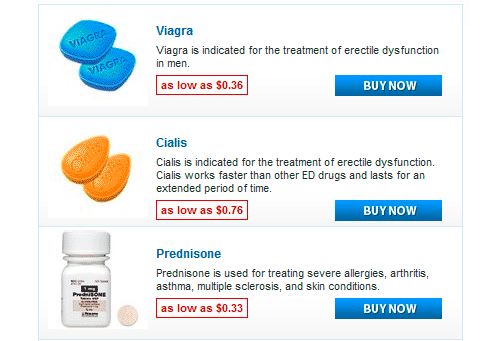

Consider India for affordable, high-quality medications. We offer a streamlined process, connecting you directly with trusted Indian pharmacies.
Save up to 80% compared to US prices on many prescription drugs. Our secure platform ensures discreet and reliable shipping.
Explore our extensive catalog, featuring brand-name and generic options. We provide detailed product information and easy-to-use search filters to quickly find what you need.
Start saving today. Browse our online pharmacy now and experience the difference.
- Meds from India: A Detailed Guide
- Understanding Indian Pharmaceutical Regulations
- Shipping and Delivery
- Payment and Security
- Customer Support and Returns
- Affordable Medications: Saving Money on Your Prescriptions
- Generic Alternatives
- Negotiate Prices
- Prescription Savings Programs
- Utilize Mail-Order Pharmacies
- Medication Cost Comparison
- Doctor Consultation
- Quality Assurance: Ensuring the Safety and Efficacy of Indian Pharmaceuticals
- Understanding Certification and Compliance
- Additional Verification Steps
- Navigating the Process: A Step-by-Step Guide to Ordering from India
- Understanding Regulations: Legal Aspects of Importing Medications
- Prescription Requirements and Documentation
- Customs Declaration and Package Labeling
- Medication Safety and Authenticity
- Commonly Prescribed Medications: Finding Affordable Alternatives
- Addressing Concerns: Dispelling Myths About Indian Pharmaceuticals
- Myth 1: Indian Drugs Lack Efficacy
- Myth 2: Safety is Compromised
Meds from India: A Detailed Guide
Research thoroughly before purchasing. Check the authenticity of the seller and verify licenses through official Indian regulatory bodies. Compare prices across multiple reputable suppliers to ensure you’re getting the best deal.
Understanding Indian Pharmaceutical Regulations
Indian pharmaceutical regulations are stringent. Look for manufacturers adhering to GMP (Good Manufacturing Practices) standards. These standards ensure product quality and safety. Familiarize yourself with the specifics of Indian drug regulations to help you make informed decisions.
Shipping and Delivery
Confirm shipping methods and expected delivery times upfront. Choose reputable shipping providers known for reliable delivery. Understand potential customs regulations and any associated import duties in your country to avoid delays or surprises. Track your package throughout the process. Always confirm the tracking number with the seller.
Payment and Security
Use secure payment gateways that protect your financial data. Avoid making payments through unreliable channels. Only use websites with SSL encryption (indicated by the padlock icon in your browser’s address bar).
Customer Support and Returns
Check the seller’s return policy before ordering. Understand their customer support process, including response times and methods of contact (email, phone). A responsive customer support team suggests a trustworthy business.
Affordable Medications: Saving Money on Your Prescriptions
Compare prices across different pharmacies, both online and local. Many online pharmacies offer significant discounts. Use prescription discount cards; many insurance providers and independent organizations offer these.
Generic Alternatives
Generic medications contain the same active ingredients as brand-name drugs but cost considerably less. Ask your doctor about suitable generic options. Generic drugs undergo rigorous testing to ensure equivalent efficacy and safety. Switching to generics can save you 30-80% on your medication cost.
Negotiate Prices
Don’t hesitate to negotiate the price, particularly for long-term prescriptions or if you’re paying out-of-pocket. Many pharmacies have some flexibility in pricing.
Prescription Savings Programs
Investigate manufacturer coupons and patient assistance programs offered by pharmaceutical companies. These programs can drastically reduce the cost of specific medications. Many programs target patients with low incomes or limited insurance coverage. Check the manufacturer’s website or consult your pharmacist for program eligibility.
Utilize Mail-Order Pharmacies
Mail-order pharmacies often offer lower prices for larger quantities of medication. This is especially beneficial for chronic conditions requiring regular medication. Bulk purchasing can translate to considerable savings over time.
Medication Cost Comparison
| Medication Type | Brand Name Cost (Example) | Generic Cost (Example) | Savings |
|---|---|---|---|
| Statin | $150 | $25 | $125 |
| Antihypertensive | $100 | $15 | $85 |
| Antibiotic | $75 | $10 | $65 |
Doctor Consultation
Discuss cost-effective options with your doctor. They can help you find the most affordable medication that meets your health needs. Your doctor may suggest alternative treatments or medication schedules to minimize overall cost.
Quality Assurance: Ensuring the Safety and Efficacy of Indian Pharmaceuticals
Choose reputable manufacturers certified by WHO-GMP. Verify their compliance with Indian regulatory bodies like the Central Drugs Standard Control Organisation (CDSCO). This ensures adherence to strict manufacturing practices.
Understanding Certification and Compliance
Look for certifications like ISO 9001:2015 for quality management systems and ISO 14001:2015 for environmental management. These demonstrate commitment to quality and safety throughout the supply chain. Check for batch numbers and expiry dates on all medications to confirm authenticity and freshness. Independent laboratory testing of samples provides further assurance of quality and potency.
Additional Verification Steps
Review online reviews and ratings from verified purchasers on trustworthy platforms. Independent, third-party audits provide additional verification. Consult a qualified healthcare professional before using any medication, even those sourced internationally, to ensure safe and appropriate usage based on your individual medical needs and health history. Always purchase medications from authorized distributors to prevent counterfeits.
Navigating the Process: A Step-by-Step Guide to Ordering from India
First, research reputable online pharmacies. Check reviews and verify licensing.
Next, create an account, providing accurate contact and shipping information. Double-check everything before submitting.
Then, select your medications and add them to your cart. Confirm quantities and dosages carefully.
Proceed to checkout. Review your order summary; ensure all details are correct before confirming.
Choose a payment method; many pharmacies accept credit cards and other secure payment options.
After payment, you’ll receive an order confirmation. Track your shipment using the provided tracking number.
Finally, allow for reasonable shipping times, which can vary depending on your location and the chosen shipping method. Be aware of potential customs regulations in your country.
Understanding Regulations: Legal Aspects of Importing Medications
Check your country’s laws first. Importing medication without authorization is illegal in many places and carries significant penalties, including fines and imprisonment. The specifics vary considerably; research your nation’s regulations on importing prescription drugs and consult with your local customs agency for clarification.
Prescription Requirements and Documentation
Always obtain a valid prescription from a licensed physician. This prescription must be in English or translated into English by a certified translator, and it needs to clearly state the medication’s name, dosage, and quantity. Retain a copy for your records, and ensure all packaging clearly displays the medication’s name and manufacturer. Import permits may also be necessary; check your import regulations for this requirement.
Customs Declaration and Package Labeling
Declare all medications on your customs declaration form. This is legally required. Improper or incomplete declaration can lead to delays or confiscation of your medications. Clearly label packages with the contents and your contact information. Incorrect labeling increases the probability of seizure or rejection by customs. Use secure packaging that protects the contents during transit.
Medication Safety and Authenticity
Source your medications from reputable suppliers only. Verify the legitimacy of any online pharmacy before ordering. Counterfeit medications pose serious health risks. Look for trusted sellers with verifiable addresses and contact information; carefully examine the product packaging for authenticity indicators.
Commonly Prescribed Medications: Finding Affordable Alternatives
Consider generic versions. They contain the same active ingredients as brand-name drugs, often costing significantly less.
- For example, a generic Lipitor (atorvastatin) is substantially cheaper than the brand-name version.
- Check with your doctor to ensure a generic is suitable for your needs.
Explore medication assistance programs. Many pharmaceutical companies offer financial assistance for their medications.
- Look into the manufacturer’s patient assistance program website for specific details.
- The Patient Advocate Foundation also provides support in navigating these programs.
Negotiate prices with your pharmacy. Pharmacies sometimes have flexibility in pricing, particularly for those with limited incomes.
- Ask about discounts for cash payments.
- Inquire about their prescription savings programs.
Utilize online pharmacy comparison tools. Websites compare prices from various pharmacies, helping you find the lowest cost.
- GoodRx and Blink Health are popular options.
- Remember to verify the legitimacy of any online pharmacy before using it.
Consider 90-day prescriptions. Often, purchasing a 90-day supply costs less per pill than three 30-day supplies.
Talk to your doctor about alternatives. Discuss cheaper medications with comparable effects or explore medications with similar therapeutic classes.
Addressing Concerns: Dispelling Myths About Indian Pharmaceuticals
High-quality, affordable medications are available from India. Many believe these drugs are inferior; this is untrue. Let’s address some common misconceptions.
Myth 1: Indian Drugs Lack Efficacy
Extensive research shows Indian generic drugs undergo rigorous testing and meet international standards. The World Health Organization (WHO) prequalifies many Indian manufacturers, indicating their adherence to quality controls. Numerous clinical trials confirm bioequivalence–meaning they perform identically to brand-name counterparts.
- Check for WHO prequalification before purchasing.
- Verify the manufacturer’s compliance with Good Manufacturing Practices (GMP).
Myth 2: Safety is Compromised
Safety concerns are often unfounded. Stringent regulatory frameworks exist, including the Central Drugs Standard Control Organization (CDSCO) in India, which ensures adherence to manufacturing and quality standards. Independent audits and inspections regularly occur.
- Source medications from reputable suppliers with transparent processes.
- Verify certifications and licenses directly with the manufacturer.
- Compare ingredient lists with brand-name equivalents.
Remember: Thorough research and responsible sourcing are key to accessing safe and effective medications.